Aztec Tribe Map
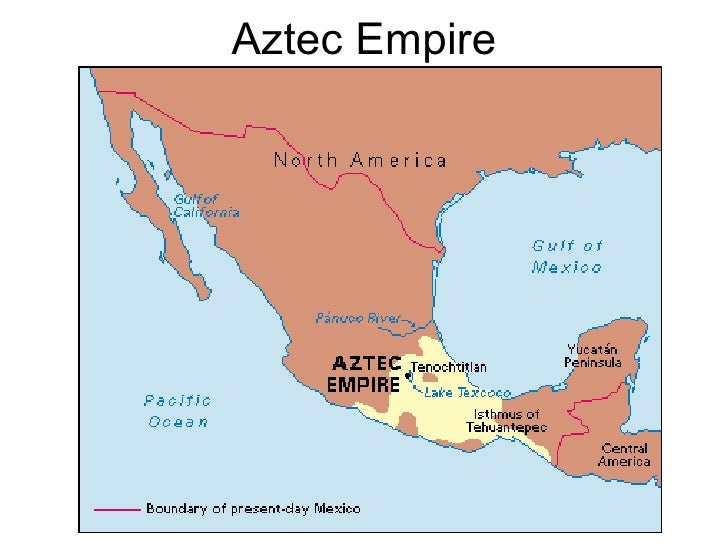
The Aztecs, or more properly, the Mexica, as they called themselves, were not originally from the Valley of Mexico. Rather, they migrated from the north. They called their homeland, 'the Place of Herons.' Aztlan has not been identified archaeologically and was likely at least partly mythical. According to their own records, the Mexica and other tribes were known as the Chichimeca. They left their homes in northern Mexico and the southwestern U.S.
Because of a terrible drought. This story is told in several surviving codices (painted, folding books), in which the Mexica are shown carrying with them the idol of their patron deity Huitzilopochtli. After two centuries of migration, around A.D.
After nearly a century of speculation and theories, an international team of geneticists has obtained conclusive evidence proving that the Incas and Iroquois are closely related to people of Altai, a Siberian region that borders China and Mongolia. The study proves how ancient Aztec’s, Incas, possibly Pre-Inca cultures, Iroquois and other natives of the Americas.
1250, the Mexica arrived in the Valley of Mexico. When the Aztecs arrived in the Valley of Mexico, it was far from an empty place. Because of its wealth of natural resources, the valley has been continuously occupied for thousands of years. The first known substantial occupation is established at least as early as the second century B.C.
The Valley of Mexico lies 2,100 meters (7,000 feet) above sea level and it is surrounded by high mountains, some of which are active volcanoes. Water coursing down in streams from these mountains created a series of shallow, marshy lakes that provided a rich source for animals and fish, plants, salt, and water for cultivation. Berdan, Frances F. 'Aztec Archaeology and Ethnohistory.' Cambridge World Archaeology, Paperback, Cambridge University Press, 21 April 2014. Healan, Dan M. 'The Archaeology of Tula, Hidalgo, Mexico.'
Journal of Archaeological Research, 20, 53–115 (2012), Springer Nature Switzerland AG, 12 August 2011, Smith, Michael E. 'The Aztecs, 3rd Edition.' 3rd Edition, Wiley-Blackwell, 27 December 2011. Van Tuerenhout, Dirk R.
“Chain Chronicle is a charming, entertaining, and effectively endless game”-Digitally Downloaded “Chain Chronicle is an absolute must-play. Sega and Gumi did a really good job with this game, and I’m actually quite excited to hear that they have tons more content in store” -MMOHut. Chain Chronicle is completely free to play. “Chain Chronicle is a charming, entertaining, and effectively endless game”-Digitally Downloaded “Chain Chronicle is an absolute must-play. Sega and Gumi did a really good job with this game, and I’m actually quite excited to hear that they have tons more content in store” –MMOHut. Chain Chronicle is completely free to play. Chain Chronicle is a mobile anime MMORPG with tower defense elements that features a unique line defense combat system that allows for more strategic gameplay than a typical turn-based RPG. Party members attack units in front of them and must be switched around during combat to respond to danger appropriately to keep their back line defended. Welcome to the Chain Chronicle English Wiki We are a community run site dedicated to helping fans of the popular Android and iOS game by Sega. Anyone can contribute and help out, even you! Become a part of our community today! Warriors Knights Magicians Archers Clerics 4 How to Transfer data in Chain Chronicle JP? February 22, 2019 by Beny uchiha Read more 7 Limit Breaker mechanics? Chain chronicle game. GAME SUMMARY. In Chain Chronicle, you play the role of a captain tasked with battling the invading Black Army in hopes of keeping them from destroying the continent of Yggdra.
'The Aztecs: New Perspectives.' Understanding Ancient Civilizations, Illustrated edition Edition, ABC-CLIO, 21 June 2005.